Buying Land in Chaffee County, Colorado: Loans, Earnest Money and What You'll Need
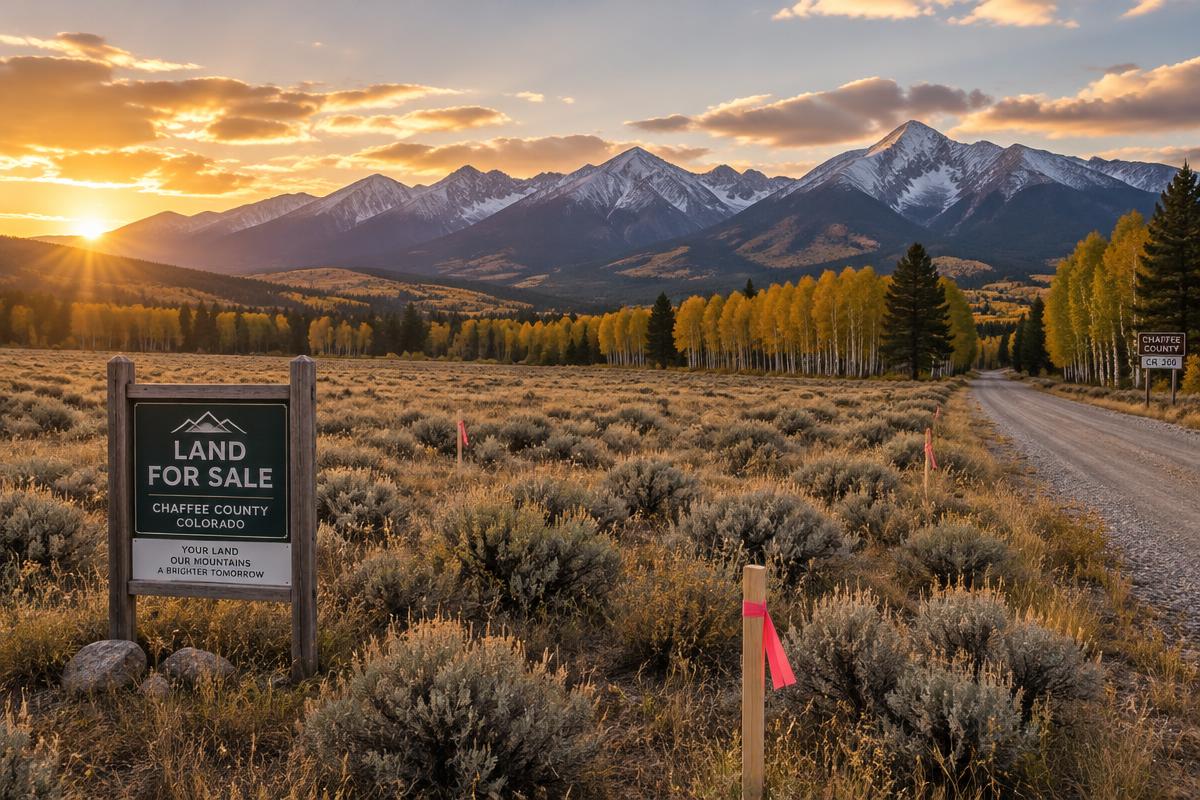
A practical guide to buying vacant land in Buena Vista, Twin Lakes, Nathrop and the surrounding Arkansas River valley — due diligence, land loans and the local lenders who write them, earnest money, closing costs and a buyer's checklist.
Land is its own kind of purchase
Buying vacant land looks simpler than buying a house — there's no inspection checklist for furnaces and roofs — but the details that decide whether a parcel works for you are fewer and bigger: water, access, zoning and financing. An in-town building lot, a Pan Ark-style subdivision parcel near the lakes and a 35-acre piece off a county road are three very different purchases.
The good news is that the process follows the same skeleton as any Colorado purchase: an offer on a contract to buy and sell, an earnest money deposit, deadlines in the contract, a title review and a closing at a title company. The differences are in what you verify and how you pay for it.
Start with the due-diligence questions
Before you write an offer, get answers on the things that can make a parcel unbuildable or unlivable for your plans: zoning and minimum lot size, permitted uses, legal and physical access, whether a well permit is likely to be approved, septic feasibility, power at the lot line, road condition and any maintenance agreement, and HOA or covenants. In the Arkansas Valley, winter access and driveway grades matter more than most buyers expect.
The county planning and building departments in Chaffee, Lake and Park Counties will answer permitted-use and building questions directly, and it's always worth a phone call before you commit. Camping rules, in particular, vary by county and lot size — we cover Lake County's rules in our Twin Lakes land and building guide, and the same caution applies everywhere: verify current rules with the county rather than relying on what a listing or neighbor says.
Financing land: how it differs from a home mortgage
You generally can't use a regular 30-year mortgage to buy undeveloped land. Land is financed with a land or lot loan, and because there's no house to repossess and resell, lenders see it as riskier: down payments are larger, rates run higher, and terms are shorter. A typical range in Colorado is 25%–50% down depending on how improved the land is, with rates roughly 1%–3% above standard mortgage rates and terms often between 2 and 10 years.
Exact requirements vary a lot by lender and parcel. One Colorado bank, for example, asks for 20% down on lots of 40 acres or less and 35% down on parcels over 40 acres, with terms up to 20 years — numbers that are common in the mountain corridors but not universal. The practical takeaway: talk to a local lender early, ideally one that regularly writes land loans in Chaffee County, and get prequalified before you make an offer. Not every mortgage company offers land loans at all.
Improvement matters. A finished lot with power, water taps and road access is usually easier and cheaper to finance than raw acreage. Larger down payments, strong credit and a low debt-to-income ratio make approvals much smoother. And if you plan to farm or ranch the property, USDA Farm Service Agency farm ownership loans — including a down-payment program for beginning farmers and ranchers — can be an option conventional lenders don't offer.
Construction loans and other paths to the dirt
If you know you'll build soon, ask about a construction-to-permanent loan, sometimes paired with a land purchase. One loan can cover buying the parcel and building the home, then convert to a regular mortgage when construction is complete — often a better deal than buying land on a short-term loan and refinancing later. Budget for a construction loan's own requirements: builder approval, plans, budget, and inspections during the build.
Cash is common in land sales, especially under six figures, and a cash offer can be more attractive to a seller precisely because it removes financing contingencies. If you'll be a financed buyer, a prequalification letter and a clean, complete offer help you compete. Some buyers also tap a home they already own — a home equity line — to buy land; your lender can walk through the trade-offs.
Land lenders we work with
Land loans are a different animal — larger down payments, shorter terms and fewer lenders offering them. These are the lenders our clients use for lots and acreage; ask each one how they handle parcels like yours.
Marti Greeley — Farm Credit of Southern Colorado
Senior Mortgage Loan Officer with Rural 1st Lending. Email: Marti.Greeley@aglending.com.
Alyssa Fritchman — Rural 1st
Rural 1st Loan Officer, NMLS 2268611, based in Montrose. Email: Alyssa.Fritchman@Rural1st.com.
High Country Bank
Colorado community bank with branches in the Arkansas Valley.
Brian Blankenmeister — Alpine Bank
Email: brianblankenmeister@alpinebank.com.
970.513.5910Website not confirmedHanna Tomas — FirstBank
Email not listed — call Hanna directly for land loan options.
Earnest money: what it is and how it's protected
Earnest money is the good-faith deposit you submit with or shortly after your offer. It isn't an extra cost — it's a credit toward your purchase at closing. On homes, deposits often run 1%–3% of the price; on land, amounts vary more and often land in a similar range, scaled to the purchase price and how competitive the parcel is.
In a Colorado transaction, earnest money is not held by the seller. The contract specifies where it's held — commonly the listing brokerage or the title company closing the deal — and it stays in that escrow account until closing or a cancellation. Never wire a deposit anywhere until you've confirmed the instructions directly with the holder by phone.
The deposit is only at risk if you back out for a reason that isn't covered by your contract's contingencies. Colorado contracts use dated deadlines — inspection, financing, title review, HOA document review and others — and if you cancel within an applicable objection period, the deposit comes back to you. Miss a deadline without a written extension and you can lose it. Mark every date on a calendar the day you go under contract.
Other costs to budget for
Beyond the down payment, plan for closing costs — title insurance for both the owner's and, if financing, the lender's policy, the closing fee, recording fees and any transfer taxes — plus an appraisal if you're financing. A boundary survey is worth considering on any rural parcel, and lenders or title companies may require updated survey or ILC (improved land survey) work depending on the property.
If the parcel doesn't have utilities yet, budget for the pieces that turn land into a homesite: a well permit and drilling, a septic design and installation, power line extension or solar with storage, a driveway, and propane or other heat. These vary enormously with distance to infrastructure — a lot two miles down a county road can cost tens of thousands more to develop than one in a platted subdivision with utilities at the street.
Also keep property taxes in mind: vacant land is taxed at its own rate, and in some cases parcels qualify for agricultural or vacant land classifications that differ from residential. The county assessor's office can tell you what the current and future taxes look like before you close.
From offer to closing
Once your offer is accepted, the clock starts. Typical steps: delivering earnest money to the escrow holder, ordering the title commitment, completing your inspection and investigation objections — which on land includes verifying access, easements, boundaries, and water and septic possibilities — satisfying your financing deadline, and then closing at the title company. Cash deals can close in a couple of weeks; financed deals usually need a few weeks for the lender's appraisal and underwriting.
Your lender will order an appraisal of the land, which can take longer in rural areas where comparable sales are sparse. If the appraisal comes in below the price, you and the seller can renegotiate or you can bring more cash to close. Stay in contact with your lender weekly — land loans don't have the standard 30-day timelines home buyers expect.
A land buyer's checklist
Before you shop: get prequalified with a local land lender, and write down your must-haves — acres, access, views, power, distance to town. While looking: confirm zoning, permitted uses, well and septic feasibility, legal access, covenants and any camping or build restrictions with the county. When you find the one: we'll help you write a clean offer with realistic deadlines and an earnest money deposit held in escrow.
Under contract: deliver earnest money, order title and survey work, meet your objection deadlines, and stay close to your lender. Then close, permit your well, and start planning the build.
Land purchases reward patience and good local help. Whether you're looking at a building lot in Buena Vista, a Pan Ark parcel near Twin Lakes or acreage toward Hartsel, we're happy to walk you through parcels, lenders and the questions to ask. This guide is general information, not financial, legal or a guarantee of financing terms.
Local links & further reading
Thinking about a move to Buena Vista?
More guides
- Local Home-Service Contacts in Buena Vista & the Arkansas Valley
- Local Home & Land Lenders in Buena Vista & the Arkansas Valley
- A Local's Guide to the Buena Vista Whitewater Park & River Parks
- Hot Springs Near Buena Vista, Colorado
- Hiking the Collegiate Peaks Near Buena Vista
- Moving to Buena Vista, Colorado: What to Know
- Twin Lakes, Colorado Land & Building Costs: A Buyer's Guide
- Selling Your Colorado Mountain Home: A Seller's Guide
- Your Step-by-Step Guide to Buying a Home in Buena Vista, Colorado
- Mortgages 101: A Financing Guide for Buena Vista Buyers
- Building with Modulars in the Colorado Mountains: Zook Cabins and SmartPads
- Where to Eat in Buena Vista: A Local's Guide to Restaurants, Coffee and Brews
- Wells, Water Rights and Septic in Chaffee County: A Buyer's Guide
- Short-Term Rentals in Buena Vista, Salida and Chaffee County: Rules, Taxes and Income
- Winter Access, Snow and Wildfire: Owning a Home Near Buena Vista
- Living in Salida, Colorado: A Local's Guide to the Town
- Living in Leadville, Colorado: A Local's Guide to the Town
- Living in Twin Lakes, Colorado: A Local's Guide to the Village