
Wells, Water Rights and Septic in Chaffee County: A Buyer's Guide
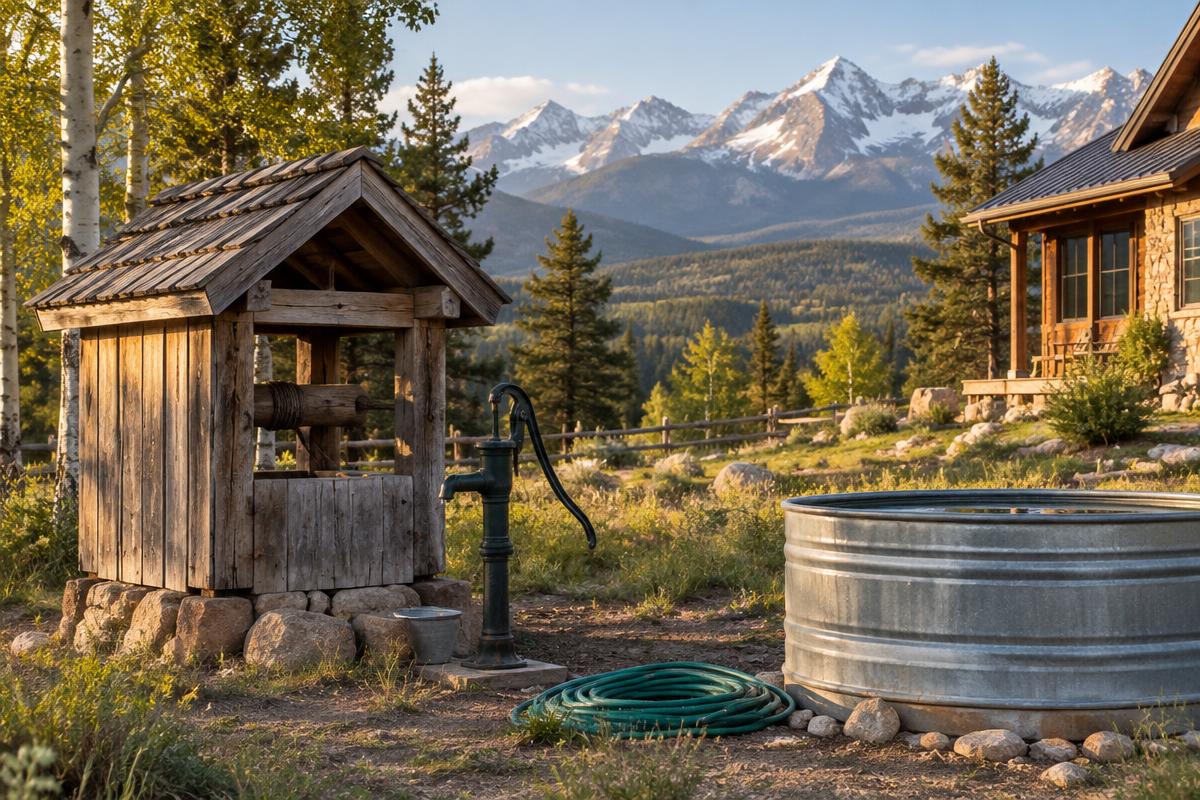
How well permits, water rights, water testing and septic systems actually work on Chaffee County property — with the questions to ask before you write an offer.
Water is the first question in this Valley
Most of Buena Vista and Salida sit on municipal water. Most of the acreage, ranch land and new subdivisions around them do not. Out there, your water comes from a well, a ditch company, a mutual water company or a small district — and each of those means something different when you're buying.
This is the single most common reason a rural deal goes sideways. Not the price, not the view — the water. Two parcels a mile apart can have completely different answers, so treat water as its own due-diligence project rather than a checkbox.
A well permit is not a water right
Well permits in Colorado are issued by the Division of Water Resources (DWR) through the State Engineer's Office. Chaffee County is in the Arkansas River Basin, administered out of DWR's Division 2 office in Pueblo.
The permit authorizes you to build a well and use water under specific conditions — where the well sits, what you may use the water for, and sometimes how much you may pump. A water right is a separate legal right to use water, governed by priority. They are not the same document and neither one promises that water will be there in a dry year.
The permit also does not guarantee the well will produce enough. It authorizes construction; it doesn't know what's under your ground. And permit categories matter: some in-house-use permits cover only household uses inside the home, while permits on qualifying parcels of roughly 35 acres or more may allow more than one home, a limited lawn or garden, and domestic animals. Never assume your parcel's permit allows what you plan to do with it — read the actual permit.
When you're buying land with no well, do not assume a permit will be issued. Groundwater and surface water in the Upper Arkansas are connected, and out-of-priority pumping can require replacement water under an approved augmentation plan. Ask DWR about the specific parcel, and ask the Upper Arkansas Water Conservancy District whether it falls inside an augmentation service area, before you count on a future well.
What it takes to put a well in
Depth is the first surprise. A USGS study of the Buena Vista–Salida basin found that 95% of Chaffee County water-supply wells were no deeper than 300 feet, drawing on alluvial-outwash and basin-fill aquifers. County permit records put the typical well around 105 feet, with most falling between roughly 60 and 200 feet. Your parcel could be far shallower or far deeper — nearby well logs are context, not a promise.
Cost follows depth and distance. One analysis of local permit records, applying published per-foot drilling rates, estimates drilling and casing in the range of roughly $4,000 to $11,000, and a complete system including pump, pressure tank and hookup at roughly $10,000 to $16,500. Those are planning estimates built from public records, not quotes, and they will drift with geology, casing needs, rig access and how far the well has to run to the house.
The practical advice is the same as everything else in the mountains: get a licensed driller out to the specific site and ask for a written scope covering drilling, casing, pump, pressure tank, electrical work, trenching and connection. Ask about their current queue and whether rigs can reach the lot in muddy spring or deep snow, because seasonality is real here.
Test the water before you fall in love with the house
Chaffee County's public health department recommends testing private well water at least once a year for total coliform bacteria, nitrate and pH. For a buyer's baseline, a broader accredited-lab panel is worth the money: add arsenic, uranium, sulfate, total dissolved solids, iron and manganese.
The county and CSU Extension's Poncha Springs office can supply test kits — bacterial kits are free, though you'll pay for overnight shipping and the lab analysis. Note that the state's own water chemistry testing has been paused, so you'll likely be using a private accredited lab. Confirm what the lab is accredited to test and how the sample must be collected before you draw one.
A failed test is a reason to investigate, not a reason to walk automatically. Confirm the result with an accredited lab, identify exactly what was found and where the sample came from, and then talk to the county, the lab or a qualified water professional about treatment or well repair. Private wells aren't regulated the way public water systems are — once you own it, testing and maintenance are yours.
Septic: permits, soils and the mound question
On-site wastewater systems in Chaffee County are permitted through county Development Services. The application covers installing, repairing or altering a system, and calls for an application fee, a licensed installer, and a scaled plot plan showing the site, wells, utilities, test locations and proposed system components. The evaluation includes a soil profile hole and a percolation test, which is how the county decides whether your soils can actually accept a system and where components can go.
One rule catches buyers off guard: systems within about 400 feet of a sewer line, inside the municipal district, generally must connect to sewer or obtain a variance. If the land you're looking at is near town, ask before you assume a septic system is even an option.
Where soils are shallow, rocky or the water table is high, a conventional below-grade drainfield may not work and a mound or raised system gets used instead — the treatment and dispersal area is built above existing grade. Whether that's permitted and appropriate on your parcel depends on a professional evaluation and county approval, and it costs meaningfully more than a conventional system. Get an engineered design and a site-specific bid rather than a number from the internet.
Maintenance is simple but non-optional: CSU Extension recommends pumping a septic tank every three to five years, adjusted for household size. Ask when it was last pumped and see the receipts.
Ditches, shares, mutual companies and town water
A ditch company share sounds like it should mean water for the house. Usually it doesn't — ditch shares generally relate to surface water delivery for irrigation, not a legal right to potable household supply on the property. A mutual water company, HOA system or central system supplies water under its own governing documents. A town or special district supplies it within its service area under its own rates and connection rules.
Before closing, get written confirmation of the provider and service boundary, whether a share or membership actually transfers with the property, current assessments and any unpaid balances, who holds the water right and its seniority, what drought or seasonal restrictions apply, the meter and service-line status, and what tap and recurring fees run. The Buena Vista Sanitation District, for example, sets tap fees by drainage fixture units and needs your plans before it can quote — and it doesn't handle town water, which is a separate department.
What to budget
Well permit: DWR publishes a fee schedule — the current amount depends on the application type, so confirm it for your parcel rather than trusting a figure from a blog.
Well drilling and casing: roughly $4,000–$11,000 as a planning estimate from local permit records.
Complete well system with pump, pressure tank and hookup: roughly $10,000–$16,500 as a planning estimate.
Water testing: free bacterial kit through the county or CSU Extension; shipping and lab fees apply, and a full chemistry panel costs more.
Septic evaluation, soil testing and permit: county fees are set by a current fee schedule; get a proposal for the parcel's actual scope.
Septic installation or a mound system: site-specific. No reliable countywide range exists — get a bid.
Water tap fees: town or district specific, quoted from plans.
Every one of these is a line item you can negotiate on or make contingent. The mistake is treating them as unknowns after closing.
Questions to ask the seller
On water: What is the DWR permit number, and what uses does it authorize? Was the well constructed and registered, and can I see the construction and pump-installation reports? Has it ever gone dry, run low, been deepened, or had a pump replaced? Is there a recent yield test and a recent accredited water-quality report, with sample date and location? What treatment equipment is installed and when was it serviced?
On septic: Where exactly are the tank, field and reserve area, and are they shown on an approved plot plan or as-built? What is the permit number, permitted bedroom capacity and installation date? When was it last pumped, and can I see records? Has it ever backed up, failed, been repaired or alarmed? Does the system match the home's current layout and bedroom count?
On shared supply: Who is the provider, and is there an active connection and meter? Do shares or memberships transfer? What are the tap fees, assessments and outstanding balances?
Documents to request: the DWR permit and complete file, well construction and pump reports, yield-test results, recent lab reports, water-company or district paperwork and bills, the septic permit, approved plans or as-built, inspection and repair records, and pumping receipts.
Local links & further reading
- Colorado Division of Water Resources — well permitting
- Chaffee County — private well water testing
- Chaffee County — OWTS septic applications and fees
- Upper Arkansas Water Conservancy District — augmentation services
- Town of Buena Vista Water Department
- Buena Vista Sanitation District — FAQs and tap fees
- Colorado Geological Survey — Chaffee County groundwater resources
- Chaffee County — water resources
Thinking about a move to Buena Vista?
More guides
- Local Home-Service Contacts in Buena Vista & the Arkansas Valley
- Local Home & Land Lenders in Buena Vista & the Arkansas Valley
- A Local's Guide to the Buena Vista Whitewater Park & River Parks
- Hot Springs Near Buena Vista, Colorado
- Hiking the Collegiate Peaks Near Buena Vista
- Moving to Buena Vista, Colorado: What to Know
- Twin Lakes, Colorado Land & Building Costs: A Buyer's Guide
- Selling Your Colorado Mountain Home: A Seller's Guide
- Buying Land in Chaffee County, Colorado: Loans, Earnest Money and What You'll Need
- Your Step-by-Step Guide to Buying a Home in Buena Vista, Colorado
- Mortgages 101: A Financing Guide for Buena Vista Buyers
- Building with Modulars in the Colorado Mountains: Zook Cabins and SmartPads
- Where to Eat in Buena Vista: A Local's Guide to Restaurants, Coffee and Brews
- Short-Term Rentals in Buena Vista, Salida and Chaffee County: Rules, Taxes and Income
- Winter Access, Snow and Wildfire: Owning a Home Near Buena Vista
- Living in Salida, Colorado: A Local's Guide to the Town
- Living in Leadville, Colorado: A Local's Guide to the Town
- Living in Twin Lakes, Colorado: A Local's Guide to the Village