Mortgages 101: A Financing Guide for Buena Vista Buyers
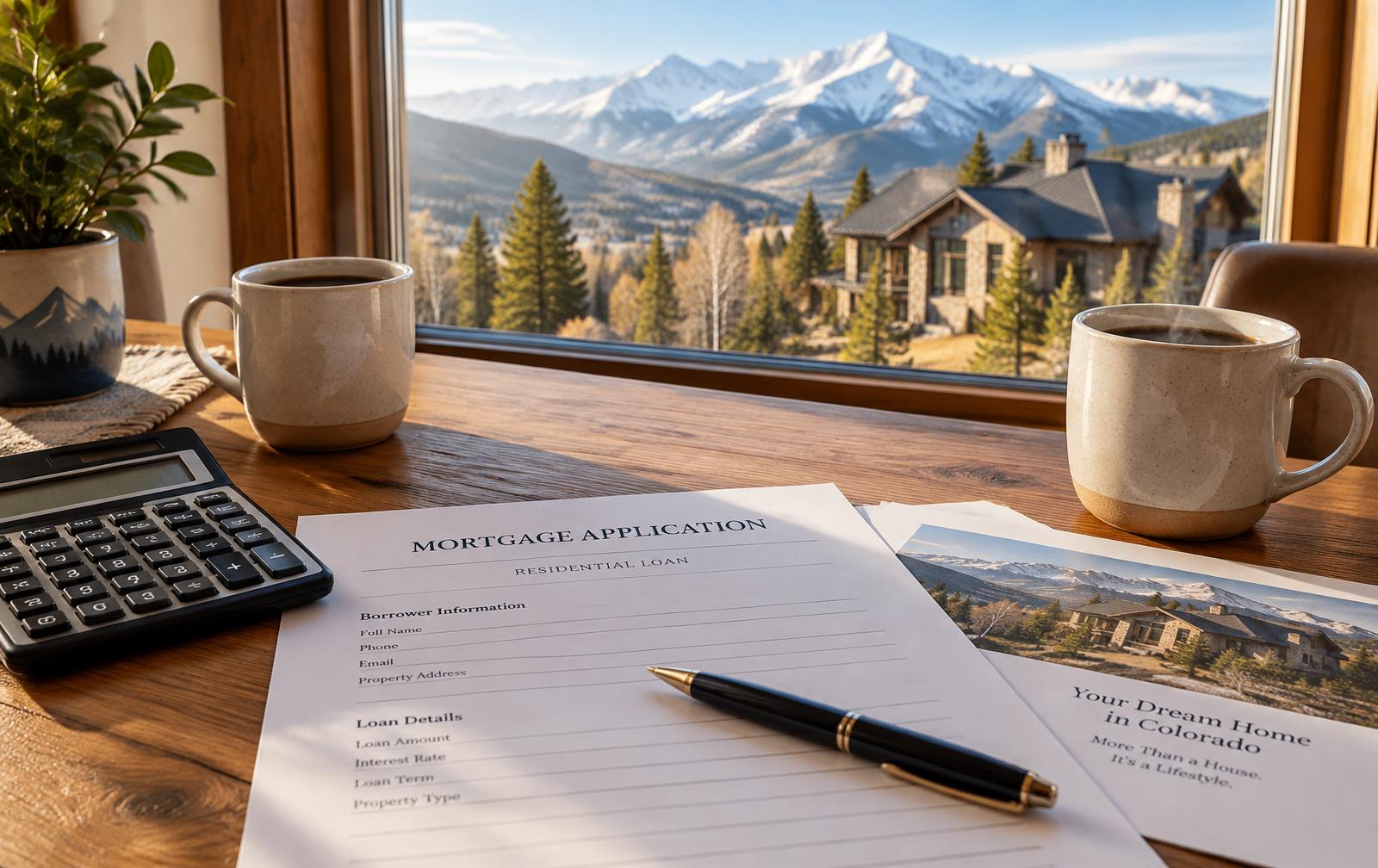
How home lending actually works — getting pre-approved before you offer, the documents you'll need, loan types, rate buydowns, seller concessions and what happens between application and clear to close.
The loan comes before the offer
In today's market, a serious offer needs a serious loan story behind it. Listing agents look at the financing strength of every offer they receive, and a written pre-approval letter from a lender — not a pre-qualification you printed from a website — is what makes your offer credible. Without one, a seller may not even respond, especially when your offer is up against others that include one.
Pre-approval also protects you from yourself. It forces the questions that matter (what can I actually borrow, what will the payment be, what do I need in cash) before you've fallen in love with a home, so you can shop with confidence instead of writing offers that fall apart.
A pre-approval letter states the loan amount a lender expects to lend you after reviewing your income, assets and credit. It's usually valid for 60 to 90 days. It is not a final commitment — full underwriting happens under contract — but it's the ticket to play. Get one before the first showing, not the day you want to make an offer.
How to get pre-approved, step by step
Step one: pick two or three lenders and submit applications. Comparing more than one is the only way to know you're getting fair terms. Local lenders and credit unions that work regularly in Chaffee County tend to know the terrain — wells, septic systems, rural appraisals — which matters later.
Step two: gather the paperwork. Expect to provide: recent pay stubs (usually the last 30 days), W-2s or 1099s for the past two years, federal tax returns for the past two years, the last two months of bank statements for every account you'll use, photo ID, and documentation of any other income (rental, Social Security, bonuses, child support you want counted). Self-employed buyers should add profit-and-loss statements and expect a longer review. If you've had a bankruptcy, foreclosure or divorce, bring those documents too — they don't automatically disqualify you, but the lender will need the paper trail.
Step three: the lender pulls your credit and reviews your debt-to-income ratio — your total monthly debt payments divided by your gross monthly income. Most conventional loans want a DTI below about 45%, though some programs stretch further. A credit score of 620 opens most conventional doors, 580 works for FHA, and every 20-point improvement above that generally buys you a better rate.
The letter typically takes a few days. Once you have it, don't let it expire mid-search — lenders can refresh it easily, but a stale letter looks weak on an offer.
Know what you're walking in with: down payment and cash to close
The down payment myth is that you need 20%. You usually don't. Conventional loans allow as little as 3%–5% down for qualified first-time and move-up buyers, FHA requires 3.5%, and VA loans for eligible veterans and active-duty buyers require nothing down. Twenty percent simply removes mortgage insurance and lowers the payment — it's a choice, not a gate.
What surprises buyers is the rest of the cash: closing costs (typically 2%–4% of the price — lender fees, title insurance, appraisal, recording, prepaid taxes and insurance), plus the lender will want to see some reserves left after closing. On a $500,000 purchase with 5% down, think roughly $25,000 for the down payment and $12,000–$18,000 more in closing costs and cushion.
Ask for an official Loan Estimate from each lender you shop. It's a standardized three-page form, which means you can compare them line by line — rate, lender fees, and cash to close. The lender with the lowest rate isn't automatically cheapest; look at the fees section too.
The loan types, briefly
Conventional loans are the default for buyers with decent credit and a 3%–20% down payment. FHA loans allow lower scores and 3.5% down, with mortgage insurance for the life of the loan in most cases. VA loans for eligible service members and veterans offer 0% down and no monthly mortgage insurance — the strongest financing on the table when it applies. USDA loans serve some rural areas with 0% down, though most in-town Chaffee County parcels don't qualify; your lender can check the address maps. Jumbo loans kick in above the conforming loan limit and matter for higher-end properties.
Mountain-area specifics matter: some lenders require a survey or ILC on certain properties, well and septic verification on rural homes, and appraisers with local comparables. Ask each lender how they handle mountain properties before you commit — the difference shows up in delays, not just rates.
Interest rates, points and locking
Your rate is priced from your credit score, down payment, loan type and the market on the day you lock. Rates change daily, and you won't know the real number until you have a property under contract — the lender needs an address, a price and a loan amount to lock.
A rate lock holds your quoted rate while the loan closes, usually 30 to 45 days. If closing gets delayed past the lock, extensions can cost money, which is one more reason to respond to lender requests quickly.
You can also buy the rate down by paying points — each point costs 1% of the loan amount and typically lowers the rate by about 0.25%. Points make sense if you'll keep the loan long enough to recoup the cost through the lower payment; run the break-even math before paying them. On loans with less than 20% down, you'll also pay mortgage insurance (PMI) until you have enough equity — and it can often be removed later, which is worth a conversation with your lender.
Rate buydowns: how sellers can lower your payment
A rate buydown is money — often the seller's — used to reduce your interest rate. A temporary buydown, like a 2-1 buydown, lowers your rate by 2% the first year and 1% the second year before it settles at the note rate; a 3-2-1 works the same way over three years. A permanent buydown uses points to lower the rate for the life of the loan.
Buydowns became popular when rates rose, because they let a seller help the buyer's monthly payment instead of dropping the price. In a slower market, asking for a seller-paid buydown in your offer can be very effective: the seller keeps their price, and you get a materially lower payment for the early years — or permanently, with points. Run the numbers both ways; sometimes the payment difference between a $5,000 price cut and a $5,000 buydown is significant.
One caution: temporary buydowns expire, so make sure you're comfortable with the full payment in year three, not just year one. Your lender can show you the amortization schedule with and without the buydown.
Seller concessions: money toward your costs
Seller concessions are dollars the seller agrees to contribute toward your closing costs, prepaid items or a buydown. They're negotiated in the offer, and there are limits based on your loan type and down payment: conventional loans cap them at 3% of the price when you put less than 10% down, 6% between 10% and 25% down, and up to 9% on the lowest loan-to-value loans; FHA allows up to 6% and VA up to 4%.
Concessions matter most when you're short on cash but qualified on income — a seller credit can cover closing costs or fund a buydown so you can keep your savings. They're also a negotiation lever on inspection repairs: sometimes a credit at closing is cleaner than repairs before it.
As a financed buyer, expect your lender to review any concession in the contract and confirm it fits the program limits. If the seller can't cover everything, your agent can structure the offer to balance price, credits and closing timeline.
Between application and clear to close
Once you're under contract, the loan file moves to underwriting, where the lender verifies everything in your application and orders the appraisal. Expect follow-up requests — a missing statement, an explanation of a deposit, an updated pay stub. Responding the same day is the single best thing you can do for your own closing date.
Protect your file during this window: don't change jobs without telling your lender, don't open or close credit accounts, don't co-sign anything, and don't move large amounts of money around without documentation. Big purchases — including furniture for the new house — can change your ratios and un-approve you. These rules are strict because lenders re-verify your credit right before closing.
When underwriting conditions are satisfied, you'll hear the words 'clear to close.' You'll receive a Closing Disclosure at least three business days before signing — review it against your Loan Estimate and ask questions early. Then closing at the title company, funds are wired (verify wiring instructions by phone, never by email alone), and the keys are yours.
Local lenders we work with
The fastest way to compare offers is to start with people who already know the valley. These are lenders we work with — call two or three, ask the same questions, and compare official Loan Estimates rather than advertised rates.
Morgan Pennington — Mountain Homes Lending LLC
Independent mortgage broker based on West Main Street in Buena Vista. Conventional, FHA, VA, USDA, jumbo, first-time buyer, self-employed bank-statement and manufactured-home programs. LO NMLS 772290.
Austin and Adam — Tree Line Home Loans
Mortgage team with Spire Financial. Email: abeger@spirefinancial.com or adamh@spirefinancial.com.
Jeff Muscutt — Match Home Loans
Email: jeff@matchhomeloans.com.
Matt Wierzbinski — Peak View Mortgage
Email: matthew@peakviewmortgage.com.
Jim Vowell — Edge Home Finance
Email: jim.vowell@edgehomefinance.com.
Land lenders we work with
Land loans are a different animal — larger down payments, shorter terms and fewer lenders offering them. These are the lenders our clients use for lots and acreage; ask each one how they handle parcels like yours.
Marti Greeley — Farm Credit of Southern Colorado
Senior Mortgage Loan Officer with Rural 1st Lending. Email: Marti.Greeley@aglending.com.
Alyssa Fritchman — Rural 1st
Rural 1st Loan Officer, NMLS 2268611, based in Montrose. Email: Alyssa.Fritchman@Rural1st.com.
High Country Bank
Colorado community bank with branches in the Arkansas Valley.
Brian Blankenmeister — Alpine Bank
Email: brianblankenmeister@alpinebank.com.
970.513.5910Website not confirmedHanna Tomas — FirstBank
Email not listed — call Hanna directly for land loan options.
Your financing checklist
Before you shop: check your credit, gather two years of income documents and two months of statements, and get pre-approved with two or three lenders. Compare official Loan Estimates, not advertised rates. While shopping: keep your financial life steady and keep your letter current.
When you write the offer: include your pre-approval letter, and consider asking for seller concessions or a buydown if cash or payment is the constraint. Under contract: respond to underwriting same-day, don't change your financial picture, review the Closing Disclosure early, and verify wiring instructions by phone.
Financing is the part of a purchase most buyers understand least and stress about most — and it doesn't have to be. We work with local lenders who explain the options in plain language, and we're happy to help you compare them or structure an offer around concessions and buydowns. Reach out anytime. This guide is general information, not lending advice; your lender will give you the specific terms, rates and program rules for your transaction.
Local links & further reading
Thinking about a move to Buena Vista?
More guides
- Local Home-Service Contacts in Buena Vista & the Arkansas Valley
- Local Home & Land Lenders in Buena Vista & the Arkansas Valley
- A Local's Guide to the Buena Vista Whitewater Park & River Parks
- Hot Springs Near Buena Vista, Colorado
- Hiking the Collegiate Peaks Near Buena Vista
- Moving to Buena Vista, Colorado: What to Know
- Twin Lakes, Colorado Land & Building Costs: A Buyer's Guide
- Selling Your Colorado Mountain Home: A Seller's Guide
- Buying Land in Chaffee County, Colorado: Loans, Earnest Money and What You'll Need
- Your Step-by-Step Guide to Buying a Home in Buena Vista, Colorado
- Building with Modulars in the Colorado Mountains: Zook Cabins and SmartPads
- Where to Eat in Buena Vista: A Local's Guide to Restaurants, Coffee and Brews
- Wells, Water Rights and Septic in Chaffee County: A Buyer's Guide
- Short-Term Rentals in Buena Vista, Salida and Chaffee County: Rules, Taxes and Income
- Winter Access, Snow and Wildfire: Owning a Home Near Buena Vista
- Living in Salida, Colorado: A Local's Guide to the Town
- Living in Leadville, Colorado: A Local's Guide to the Town
- Living in Twin Lakes, Colorado: A Local's Guide to the Village